
Offshore wind turbine foundations, submerged cables and protective systems remain exposed to seawater, currents and changing seabed features. Assessing their condition requires reliable underwater observations and a clear understanding of what each inspection should achieve.
ROV inspections allow offshore teams to examine submerged infrastructure. Inorder to do that, they use remotely operated vehicles equipped with cameras, sensors and specialised tools. The information collected helps identify deterioration, document structural conditions and support maintenance planning.
But what does an inspection involve? And how is the collected information used? Understanding the process provides valuable insight into how offshore assets are monitored.
What are ROV inspections and what do they cover?
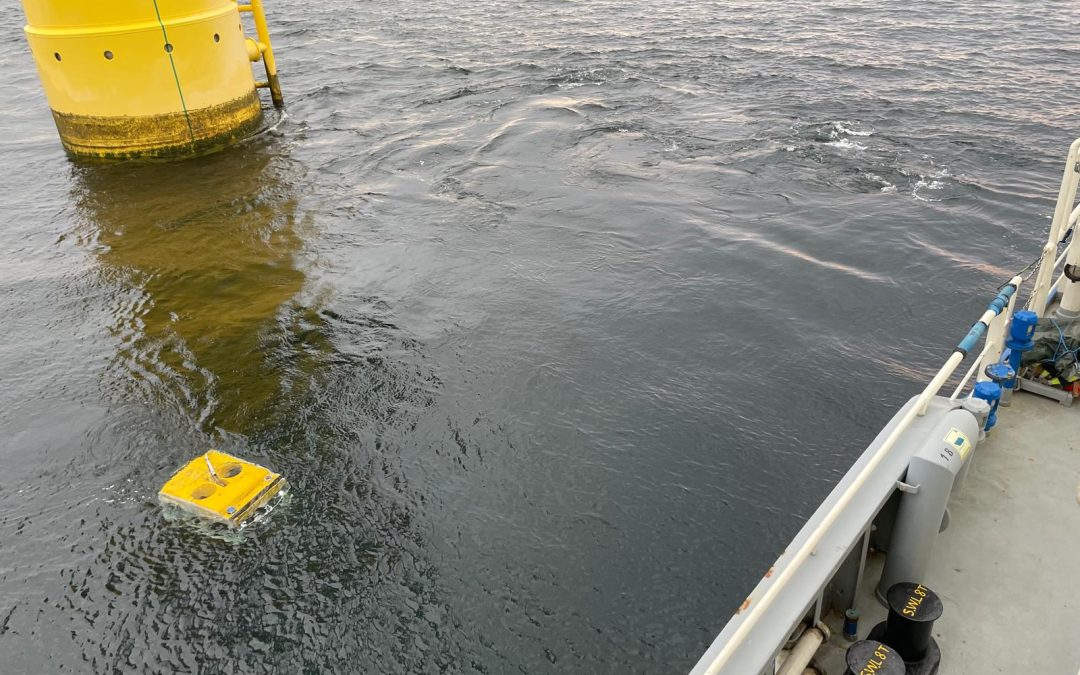
A remotely operated vehicle (ROV) is an underwater robot controlled by operators at the surface, from a support vessel. Equipped with cameras, lighting and task-specific instruments, it can navigate around submerged structures and collect visual or measurement data. The equipment and inspection method are selected according to the asset, site conditions and agreed scope of work.
General and Close Visual Inspections
General Visual Inspection (GVI) focuses on the overall condition of submerged structures. Using ROV-mounted cameras, inspection teams examine foundations, joints and other accessible components for visible corrosion, mechanical damage, marine growth and signs of deterioration.
Close Visual Inspection (CVI) provides a more detailed assessment of selected areas. The ROV examines specific components at closer range, allowing inspectors to assess features such as damaged coatings, weld conditions or localised deterioration. Cleaning and supplementary measurements may be required to obtain sufficient detail.
Findings from a GVI can help identify locations requiring a CVI, allowing inspection effort to be directed towards areas of concern.
Offshore structures and components
HBC’s ROV inspection work covers a range of submerged components across offshore wind farms, from turbine foundations to cable protection and corrosion prevention systems. The specific inspection tasks are defined by the asset’s design, condition and agreed project scope.
During foundation inspections, HBC teams assess steel structures, grouted connections and marine growth, documenting visible deterioration and areas requiring further attention. Cable Protection System (CPS) inspections focus on components such as J-tubes, bellmouths and cable interfaces, checking for abrasion, damage and other signs of wear.
HBC also carries out cathodic protection surveys, including anode assessments and potential measurements, to help evaluate the condition of corrosion protection systems.
These activities can form part of a coordinated inspection campaign. They provide asset owners with structured findings across different underwater components.
How does an underwater inspection work?
An effective inspection begins long before the vehicle enters the water. The inspection scope, meaning which structures, components and measurements are required, is defined by the asset owner’s engineering team. HBC then plans how to deliver it. This means preparing method statements and task plans, assessing risks, and organising the vessel, equipment and personnel. Permits and access arrangements with the asset owner, coordination with the wind farm’s marine control, and limits on tidal currents and weather all shape how and when the work is carried out.
HBC’s offshore inspection approach combines project-specific planning, experienced personnel and documented procedures. All to support safe operations and consistent data collection.
Preparing and deploying the ROV
Before deployment, the team completes pre-use checks on the ROV, its launch and recovery system (LARS) and task-specific equipment, such as calibrated cathodic protection probes and cavitation cleaning tools. The support vessel takes up position alongside the structure. The ROV is only launched once permission has been given, an exclusion zone is in place and current speeds are confirmed to be within operational limits.
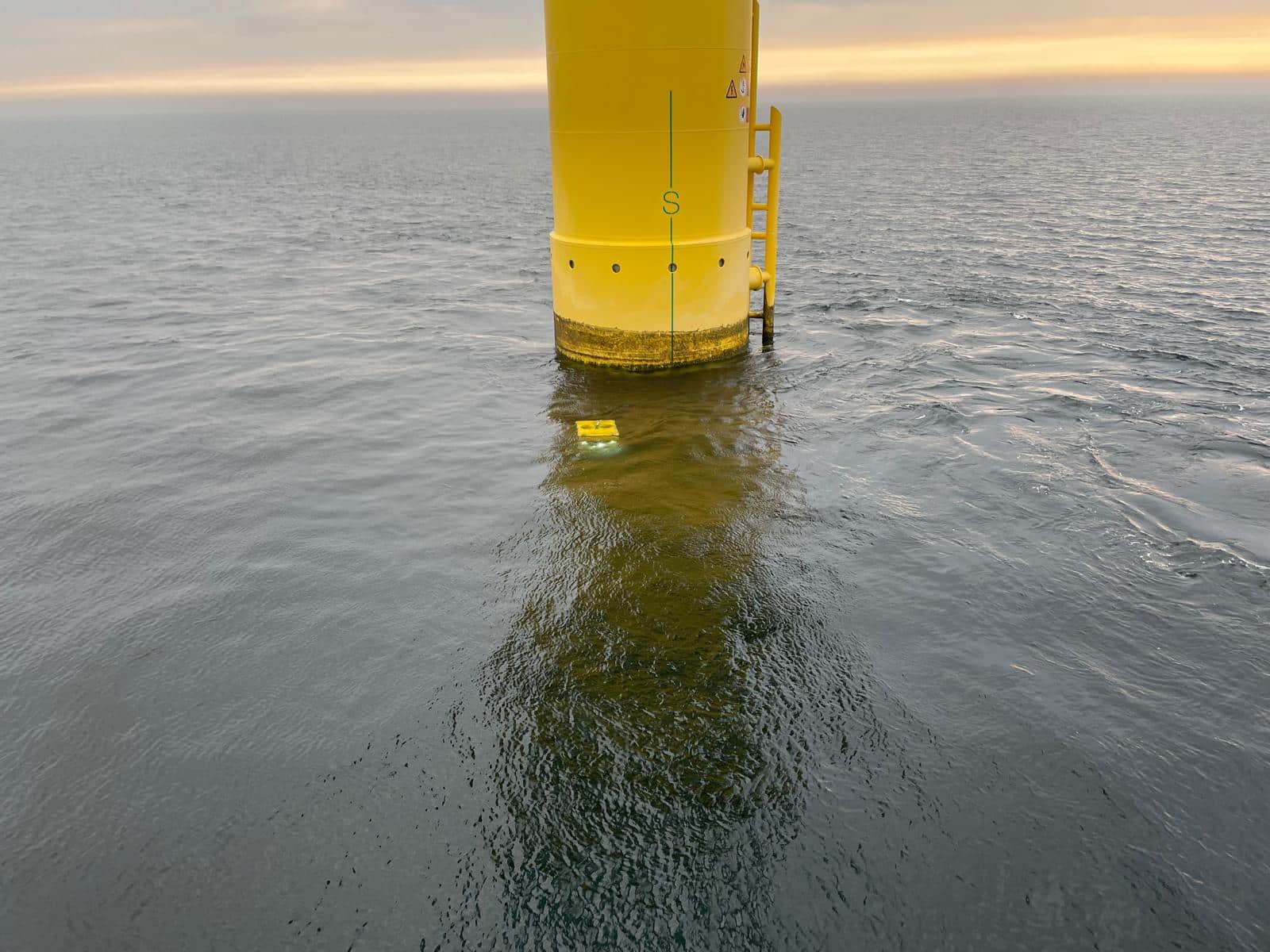
Once in the water, the ROV is guided from the surface using its positioning system and sonar to locate the structure. It then works through the inspection in a systematic pattern, using fixed reference points around the foundation. This way each component can be recorded with care. The sequence can be adjusted to suit water depth, weather and tidal conditions, making the most of each available working window.
HBC’s ROV system is also audited annually in line with IMCA R006, the International Marine Contractors Association’s guidance for ROV system audits. The audit covers the vehicle, launch and recovery system, control equipment, maintenance records and documentation. Therefore it provides independent assurance that the system is fit for offshore operations.
Recording and reviewing inspection findings
During the inspection, video footage, still images and measurements are collected against the specified inspection requirements. Examples include cathodic protection potential readings, anode depletion estimates, and the extent of any cable free span or exposure. Where needed, marine growth is removed so surfaces can be properly assessed. Anomalies are logged with clear location references, following the reporting criteria set by the asset owner. As a result, each finding can be traced back to a specific component.
If a finding poses a potential safety risk, such as damaged cable armour, work at that location is stopped and the asset owner is notified straight away.
The collected data is then reviewed and compiled into inspection reports. These give the asset owner’s engineers a documented basis for evaluating the asset’s condition. The findings help determine whether further investigation, monitoring or maintenance is needed.
How the inspections support offshore maintenance
Consistent reporting allows inspection results to be compared across successive campaigns, helping teams track changes over time. It also supports long-term asset management by maintaining a reliable record of previous observations and assessments.
Turning inspection data into practical decisions
Inspection reports bring together visual evidence, measurements and recorded observations. Depending on the agreed scope, this information can help project teams:
- assess structural condition: review signs of deterioration, corrosion-related concerns or damage to submerged components;
- identify maintenance priorities: determine which findings warrant closer examination, continued monitoring or corrective work;
- support future inspections: use documented observations and reference images to compare asset conditions during subsequent campaigns.
The appropriate response depends on the condition observed, project requirements and the client’s maintenance strategy.
HBC’s approach to offshore inspection projects
At HBC, inspection planning begins with the agreed scope of work and the specific infrastructure being assessed. Our teams coordinate vessel operations, ROV equipment, inspection personnel and reporting requirements to deliver structured underwater assessments.
Experience across offshore wind infrastructure allows HBC to adapt its inspection approach to different foundation types, components and site conditions. This includes coordinating specialist inspection equipment and documenting findings in a format suitable for technical review.
Our ROV capabilities are part of a wider range of subsea services, bringing together different inspection and underwater operations according to each project’s requirements.
ROV inspection services for offshore projects
ROV inspections play an important role in maintaining offshore wind infrastructure. Their effectiveness depends on selecting the right inspection methods, coordinating offshore operations and documenting findings accurately.
HBC combines technical expertise, experienced personnel and project-specific planning to support offshore inspection programmes.
Explore our offshore services and contact HBC to discuss the inspection requirements of your next project.