
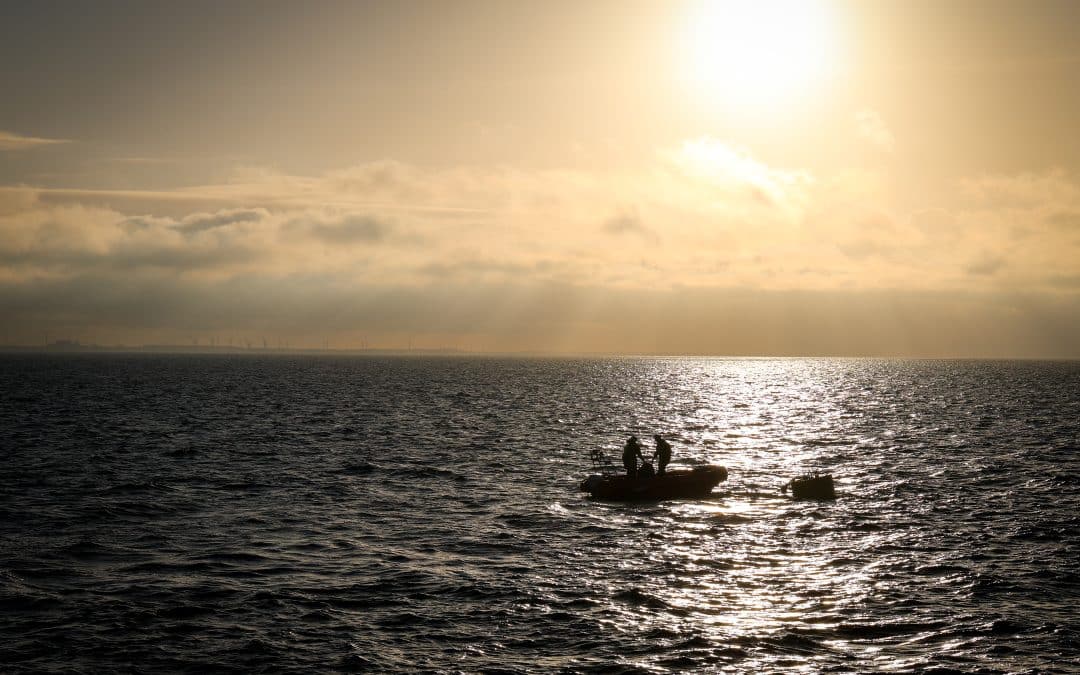
Offshore projects rely on specialist underwater work, from infrastructure inspections and maintenance to seabed surveys and marine recovery. These activities fall under subsea services, combining remotely operated vehicles (ROVs), commercial diving and vessel-based operations, as well as surveying technology.
At HBC, this expertise supports projects ranging from offshore wind farm inspections to environmental recovery and specialist marine operations. Understanding how these different activities fit together offers a useful starting point for exploring the work taking place beneath the surface.
HBC’s subsea services and their applications
Subsea services cover a broad range of technical activities performed underwater to investigate, inspect, maintain or recover structures and objects in marine environments. Their applications extend across offshore energy, marine infrastructure, environmental projects and specialist recovery operations.
The methods used depend on the project’s objectives, water depth, site conditions and the type of work required. Three main areas help explain the scope:
- ROV inspections: using remotely operated vehicles to examine submerged infrastructure, assess its condition and identify areas requiring attention – GVI.
- Commercial diving operations: deploying divers for close visual inspections (CVI), maintenance, repairs and tasks requiring direct underwater intervention.
- Seabed surveys: collecting information about seabed conditions, underwater features and potential obstacles to support project planning.
Specialist equipment plays an important role across these activities. ROVs provide visual access and can carry additional inspection tools, while survey instruments gather and process underwater data. Commercial divers carry out hands-on underwater work, with vessels providing equipment, lifting support and operational coordination.
HBC’s offshore capabilities bring together these disciplines, allowing different methods to be applied according to the requirements of each project.
ROV inspections for offshore infrastructure
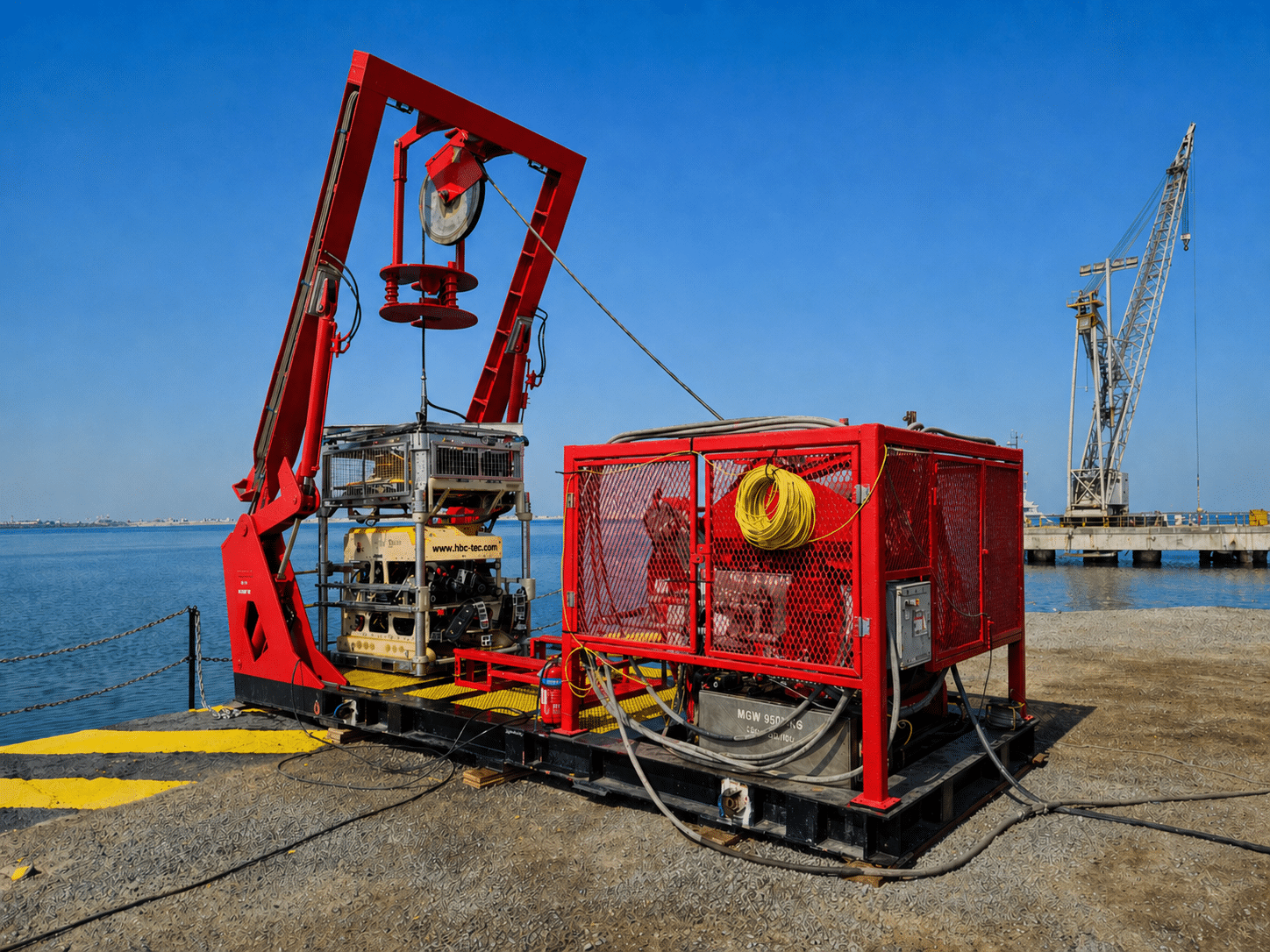
Remotely operated vehicles (ROVs) allow offshore teams to examine underwater structures while operators remain on the surface. Equipped with cameras, lighting and specialised sensors, these vehicles can reach areas where direct access is difficult or where conditions make diving more demanding.
In offshore wind projects, ROVs are used to inspect submerged foundations, cables and other infrastructure for visible damage, deterioration or changes in condition. Depending on the vehicle and its equipment, they can also support measurements and more detailed assessments.
The information collected helps operators understand the condition of their assets and determine whether further investigation or corrective work is required. ROV inspections can also complement commercial diving operations by providing an initial assessment before divers are deployed.
For HBC, remotely operated systems form part of a broader approach to underwater inspection, with the choice of method guided by site conditions and operational requirements.
Commercial diving services: underwater inspections, maintenance and repairs
While remotely operated vehicles provide valuable inspection data, certain underwater tasks require direct intervention by commercial divers.
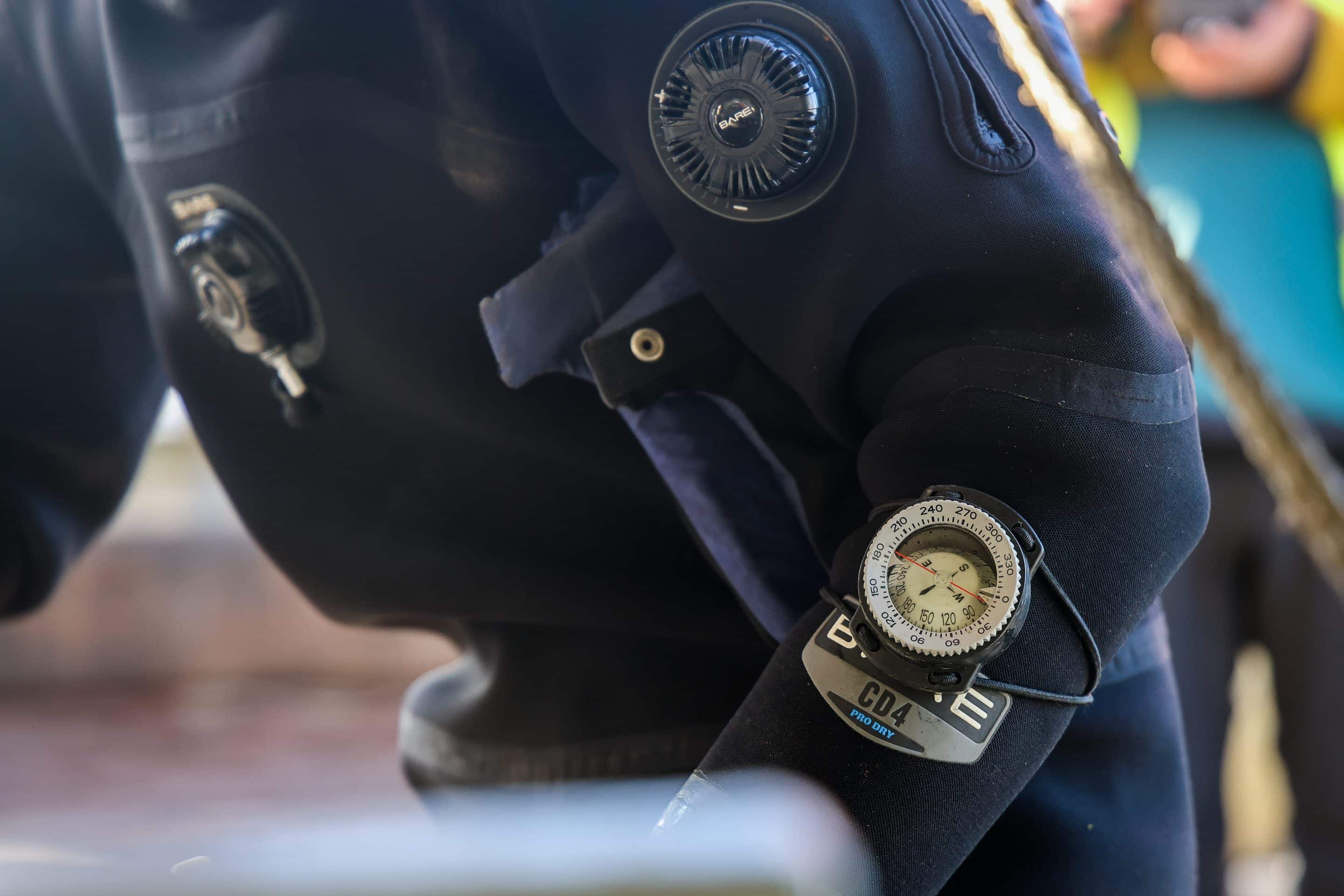
Commercial diving teams can examine structures at close range, perform maintenance, carry out repairs and assist with underwater construction activities. Their work may involve removing marine growth, inspecting structural components or completing corrective tasks identified during earlier assessments.
Mentioned services require careful planning, with equipment and surface support adapted to the underwater conditions and technical requirements of each project. Safe execution also requires coordination between divers and surface personnel, supported by suitable vessels and specialist equipment.
HBC’s experience in commercial diving extends across offshore infrastructure and other demanding marine environments, where technical expertise and careful operational planning are essential.
Seabed surveys for offshore projects
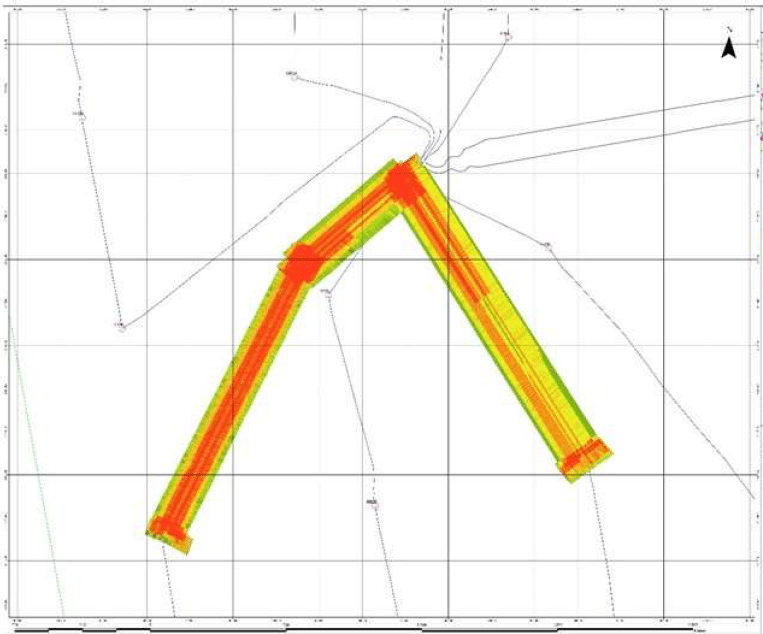
Understanding what lies on and beneath the seabed is an important part of planning offshore operations. Hydrographic and geophysical surveys provide information about water depths, seabed features and potential obstacles, helping project teams assess site conditions before construction or other underwater activities begin.
HBC uses specialist survey equipment, including multibeam bathymetry systems, side-scan sonar and magnetometers, to support the collection of underwater data.
Seabed mapping for offshore wind farm planning
During offshore wind farm development, seabed mapping helps establish the underwater conditions relevant to foundation locations, cable routes and installation activities.
Multibeam surveys measure water depths and produce detailed representations of seabed topography. Side-scan sonar complements this information by creating acoustic images that can reveal objects and changes in seabed characteristics.
Together, these methods provide information that supports planning decisions and helps identify areas requiring further investigation.
Subsea cable locating and seabed hazard detection
Survey work can also help identify existing subsea cables, seabed obstacles and potential hazards that could affect offshore operations.
Depending on the investigation, acoustic and magnetic survey methods may be used to locate underwater objects or identify anomalies associated with possible unexploded ordnance (UXO).
These findings help project teams determine where additional inspections, specialist assessments or clearance activities may be needed before work proceeds.
Specialist underwater operations and marine recovery
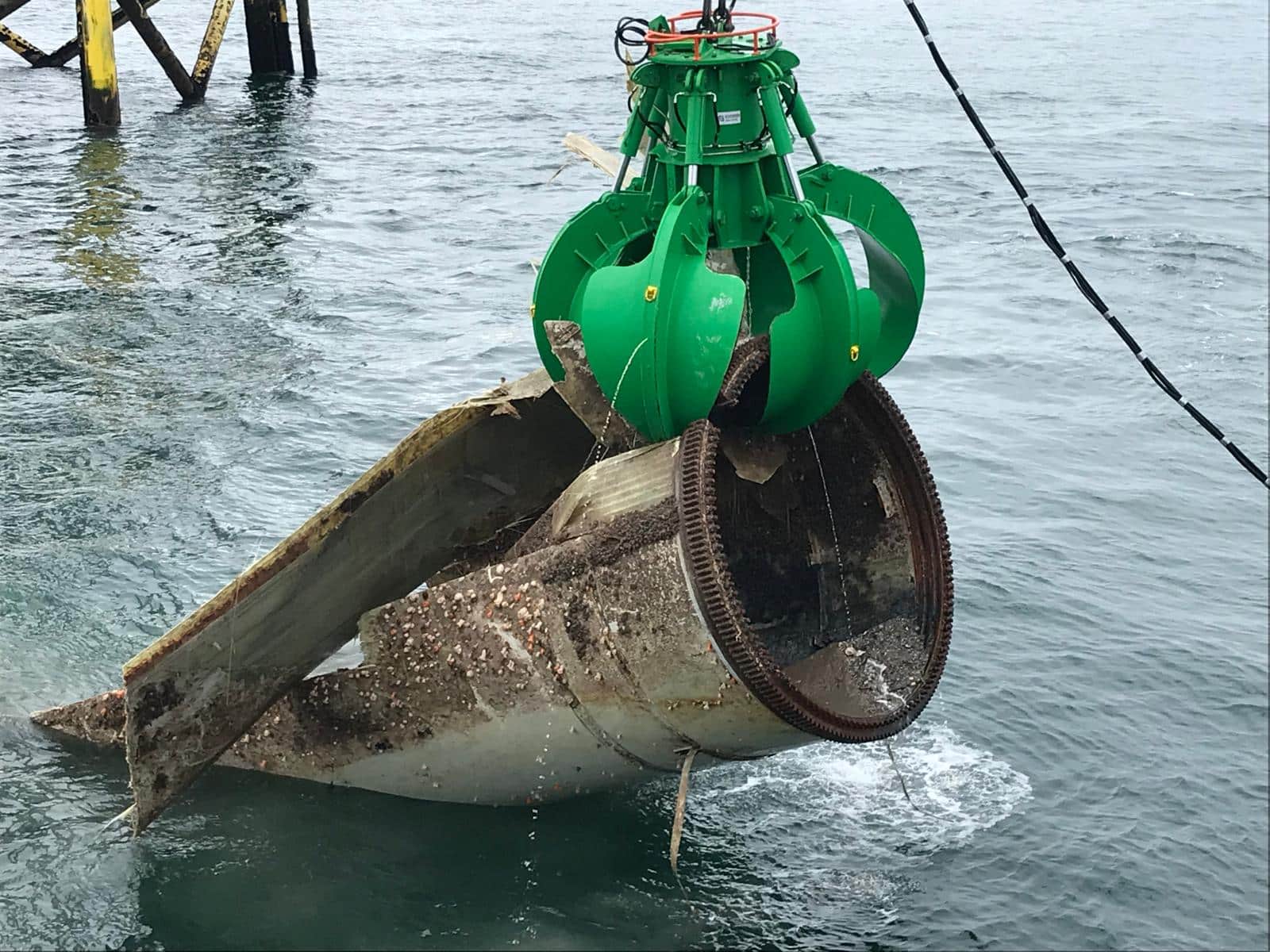
The applications of subsea services extend beyond the inspection and maintenance of offshore infrastructure. Commercial diving teams and support vessels also contribute to environmental recovery, underwater archaeology and specialist salvage projects.
These assignments often involve complex site conditions and recovery methods tailored to the objects being handled. HBC’s experience in environmental and historic wreck projects illustrates how specialist underwater expertise can be applied to different challenges.
Marine environmental recovery and ghost net removal
Abandoned fishing gear can remain entangled around shipwrecks, posing risks to marine life and the surrounding environment. Its removal requires careful planning and controlled underwater operations.
Through CleanSeabed, HBC contributed commercial diving expertise and vessel support to a ghost net recovery campaign in Denmark’s Øresund Strait, which brought approximately 3.4 tonnes of abandoned fishing gear ashore.
The project demonstrates how commercial diving and vessel-based operations can contribute to wider marine environmental initiatives.
Historic shipwreck recovery and underwater archaeology support
Historic shipwreck recovery requires careful handling of submerged structures, often in cooperation with archaeological specialists.
HBC’s involvement in the Viking Ship Museum’s archeological project, featured in Danish TV production Mystery of the Deep, included supporting the recovery of a historic wreck onto the deck of HBC Achiever.
This project, on the other hand, highlights how underwater recovery expertise can support the investigation and preservation of maritime heritage.
The value of subsea services across marine projects
From ROV inspections and commercial diving to seabed investigations and specialist recovery, underwater projects call for different combinations of technical expertise, equipment and operational planning.
HBC brings experience from offshore infrastructure, environmental initiatives and complex assignments, adapting its methods to the demands of each project.
This article opens a series exploring individual underwater disciplines and their practical applications in greater detail.
Explore HBC’s expertise and contact our team to discuss the requirements of your next underwater project.